

MUST-VISIT

PICTURESQUE

HERITAGE
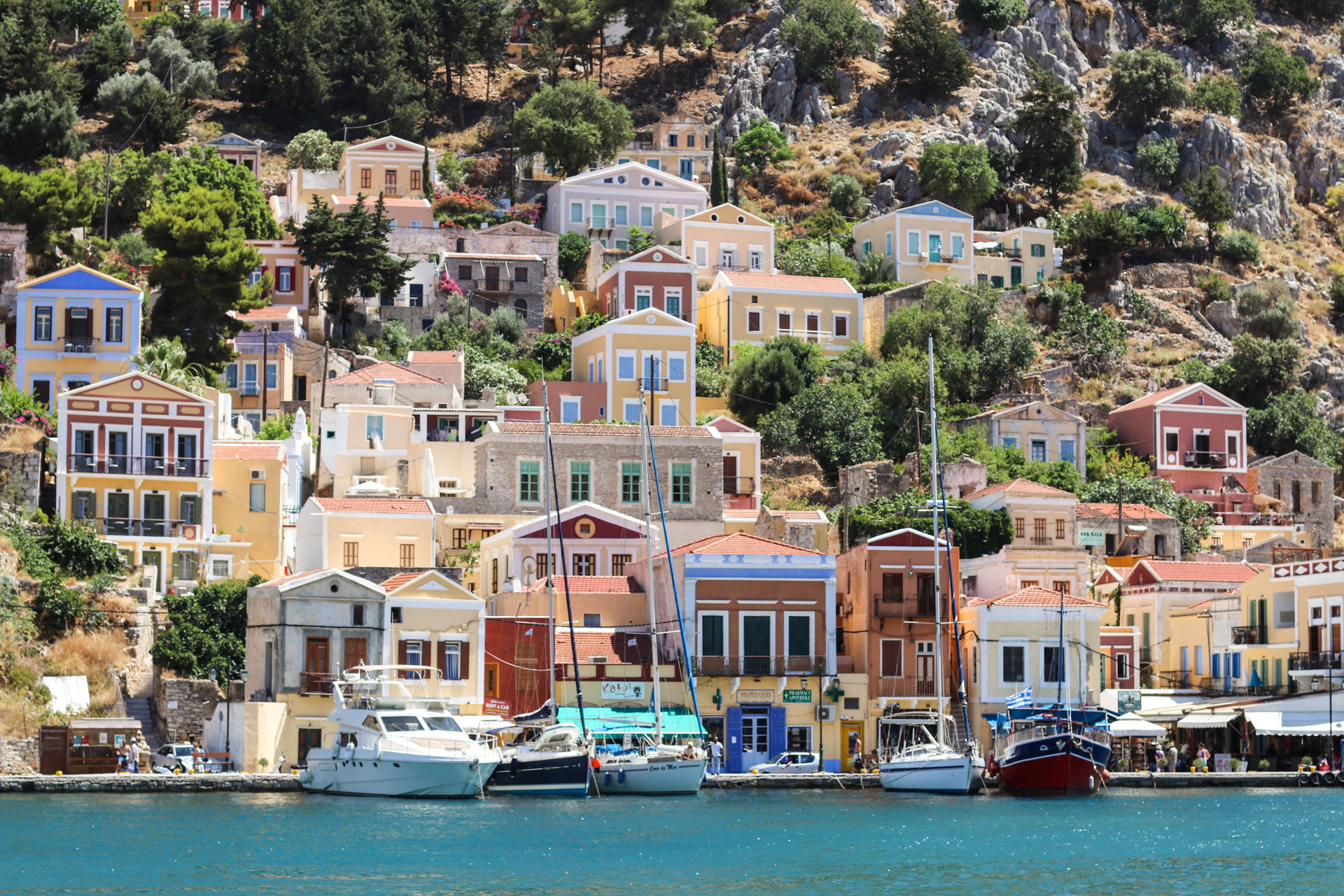
Arriving at Symi feels like stepping into a postcard
Symi Town Gialos
Gialos, the natural harbor and capital of Symi, is truly the heartbeat of the island and one of the most beautiful ports in all of Greece. This is the first view that welcomes you as your boat gently enters the bay—whether you arrive by ferry or on one of our day cruises from Rhodes—and it instantly sets the tone for everything that follows.
Gialos is made for slow exploration. Everything is within easy walking distance, making it perfect for a relaxed seaside stroll from one end to the other. Along the promenade, you can pause in shaded cafés, enjoy a coffee with a view of the masts and colorful houses, or browse small shops filled with local character and island charm.
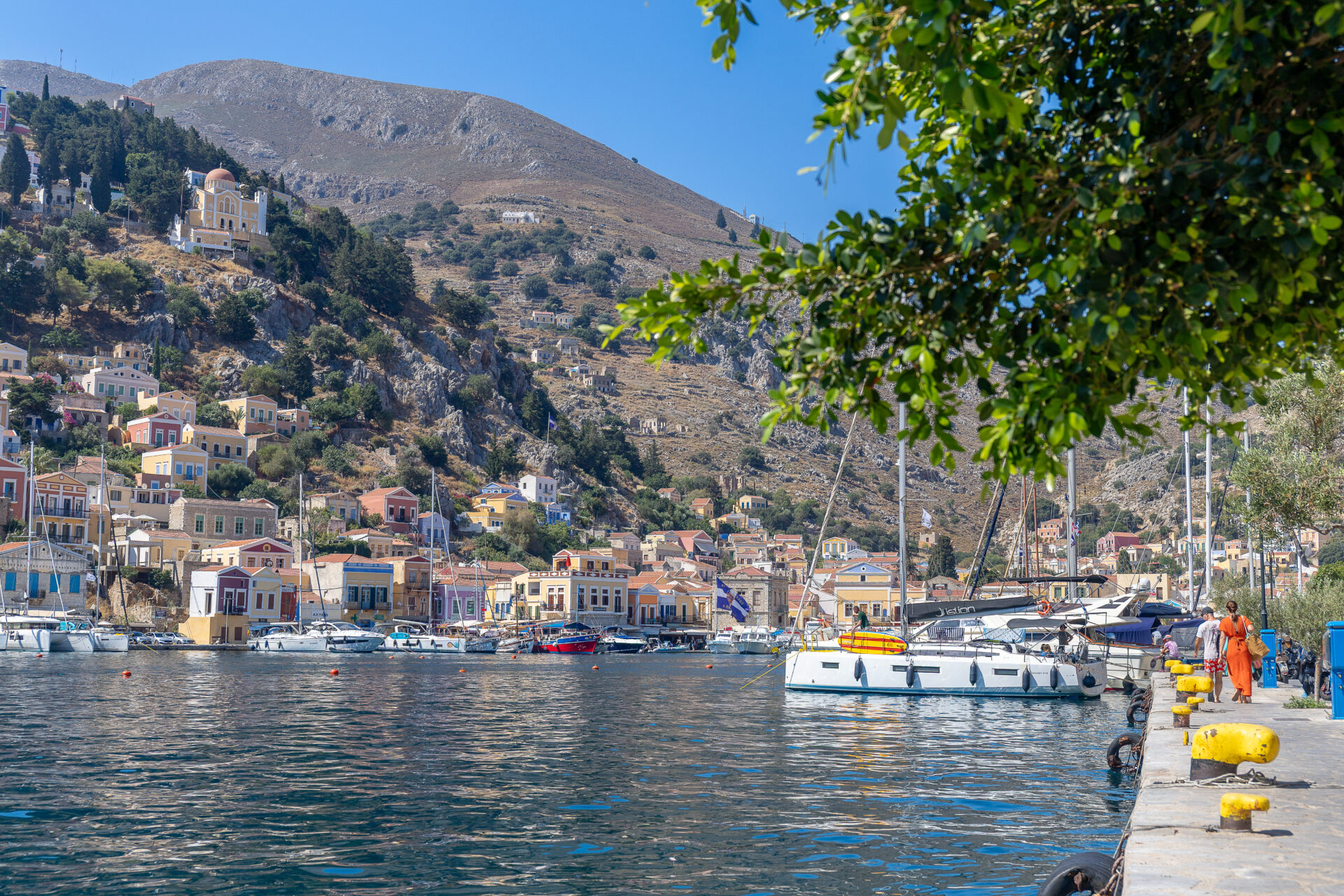
Pedestrians can walk around Gialos Harbor all along the waterfront
What makes Symi truly special is its rare architectural harmony. It is considered one of the best-preserved neoclassical settlements in Greece, not only because of its beauty, but because the entire harbor is built in a unified style that you simply won’t find anywhere else on this scale.
The port began taking shape in the 15th century, with a compact, amphitheatrical layout of stone houses, narrow passages, and vaulted alleys designed around the sea. By the early 20th century, Gialos had evolved into an elegant blend of European neoclassical design, with clear influences from Aegean tradition and Venetian aesthetics. This unique architectural identity reflects the island’s remarkable prosperity during the 18th century, when Symi was a thriving maritime and sponge-diving center.
Notice the ox-eye. Most of the buildings have a circular opening in the middle of the pediment. It serves as an airway and is also considered to keep the “evil” eye away.
Symi’s Sponge Diving Tradition
For centuries, Symi was closely connected to the sea, and sponge diving became the island’s greatest source of wealth and pride. During the 18th and 19th centuries, Symi developed one of the most important sponge-diving fleets in the Mediterranean, with hundreds of wooden boats sailing as far as North Africa in search of natural sea sponges. Life for the divers was far from easy — long journeys, dangerous depths, and primitive diving equipment made the profession extremely risky.
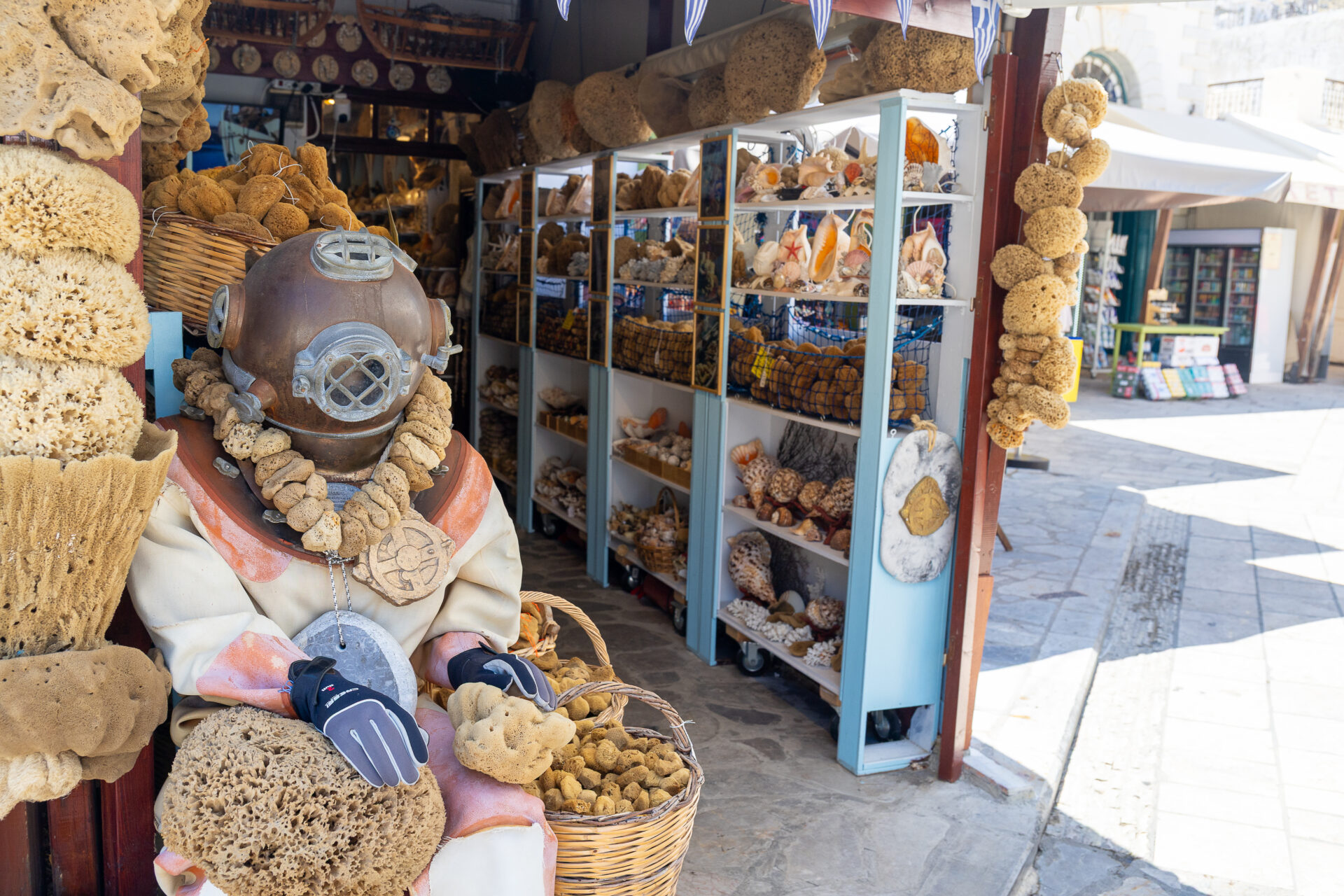
Sponge shops often feel like small museums, displaying original diving suits, traditional equipment, and old photographs from Symi’s sponge-diving era
Yet this thriving trade brought remarkable prosperity to the island and shaped the elegant character of Gialos that visitors admire today. Many of the colorful neoclassical mansions overlooking the harbor were built by wealthy sponge merchants and captains, turning Symi into one of the most prosperous islands in the Dodecanese. Even today, the sponge-diving heritage remains an important part of local identity, and as you walk along the harbor, you will still find traditional sponge shops displaying the island’s most famous natural treasure.
One of Symi’s most legendary sponge divers, Stathis Hatzis, made history in 1913 by diving to an astonishing depth of 88 meters (288 ft) — and returning to the surface in just 3.5 minutes.
Clock Tower “Roloi”
At the entrance to Gialos Harbor stands the Roloi (the Greek word for “clock”), one of Symi’s most recognizable landmarks. Built in 1881 by the sons of P. Petridis, this elegant clock tower has become a beloved meeting point for locals and visitors alike, earning the affectionate nickname “Little Ben.” It stands on the right-hand jetty, where many excursion boats and ferries dock today—the very same spot from which Symi’s sponge-diving vessels once set sail on their long Mediterranean journeys.
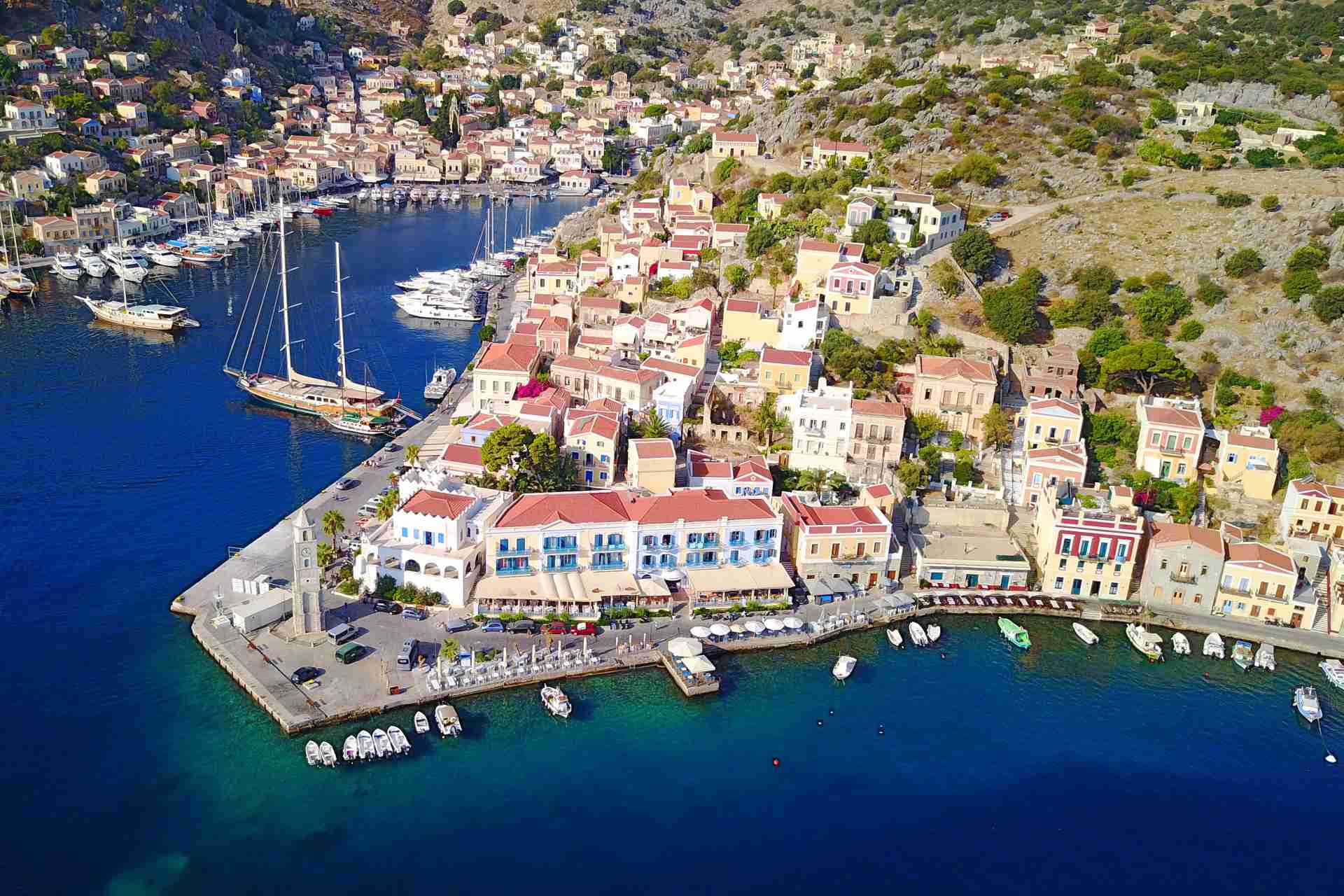
The Roloi, lovingly called “Little Ben” by the locals, has been watching over Symi Harbor since 1881 and remains one of the island’s most iconic landmarks
Just beside the clock tower is the old Police Building, a striking reminder of the island’s Italian period. Like the rest of the Dodecanese, Symi was under Italian rule from 1912 until the end of World War II, and several buildings around the harbor still reflect the distinctive architectural influences of that era.
Charani – the Old Shipyard”
The maritime traditions of Symi are still very much alive today. At the historic Charani shipyard, skilled craftsmen continue the island’s centuries-old shipbuilding heritage, carefully building, repairing, and restoring traditional wooden boats by hand. Their expertise is highly valued throughout the Dodecanese, with fishermen and boat owners from neighboring islands still commissioning these beautiful vessels. Nearby, visitors can spot the remains of the old Tarsanas shipyard, a reminder of Symi’s long relationship with the sea. For those looking for a rewarding viewpoint, a steep staircase leads up from Charani to the Evangelistria Church, offering lovely views over the harbor and the colorful houses of Gialos below.
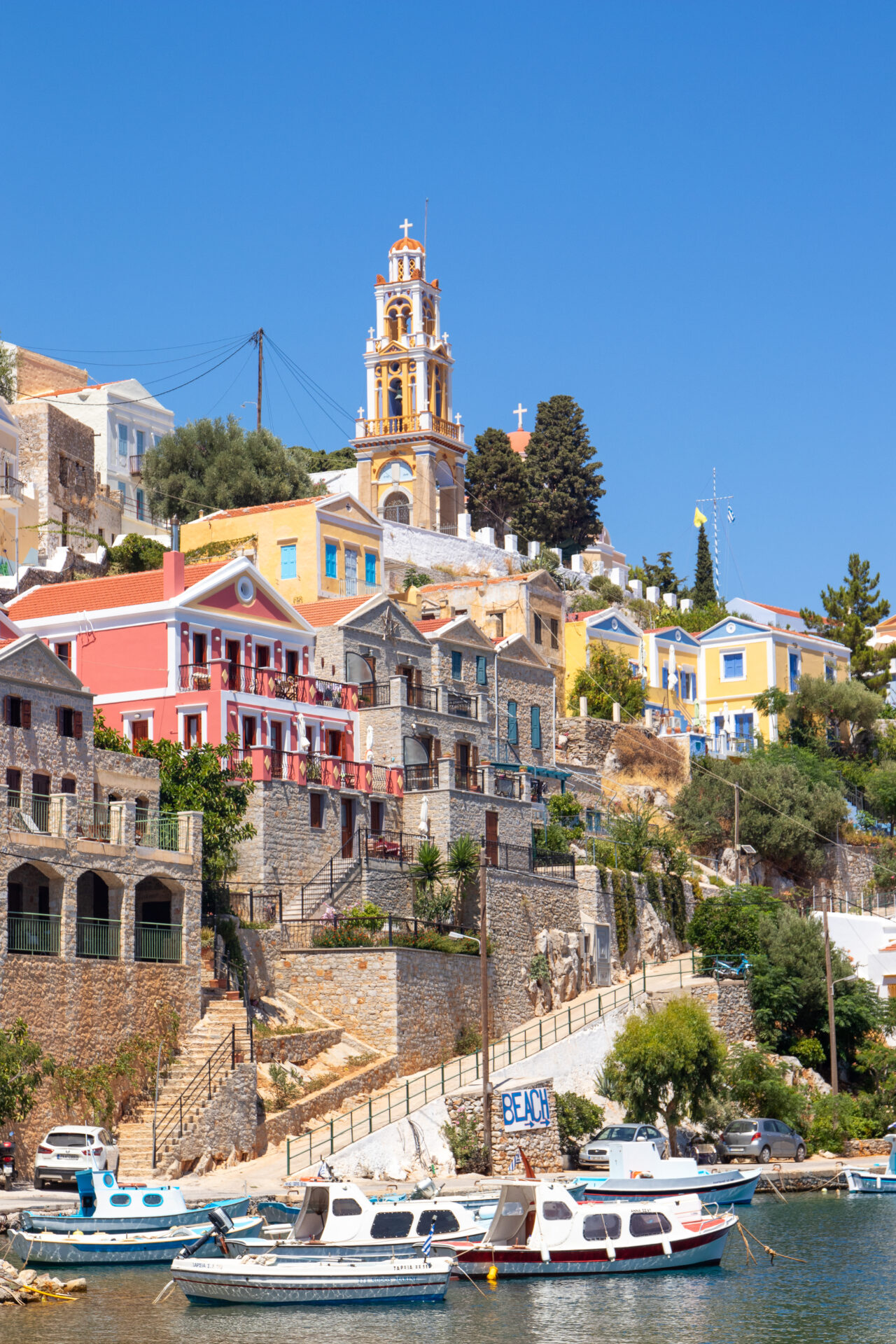
Take the staircase from Charani to Evangelistria Church
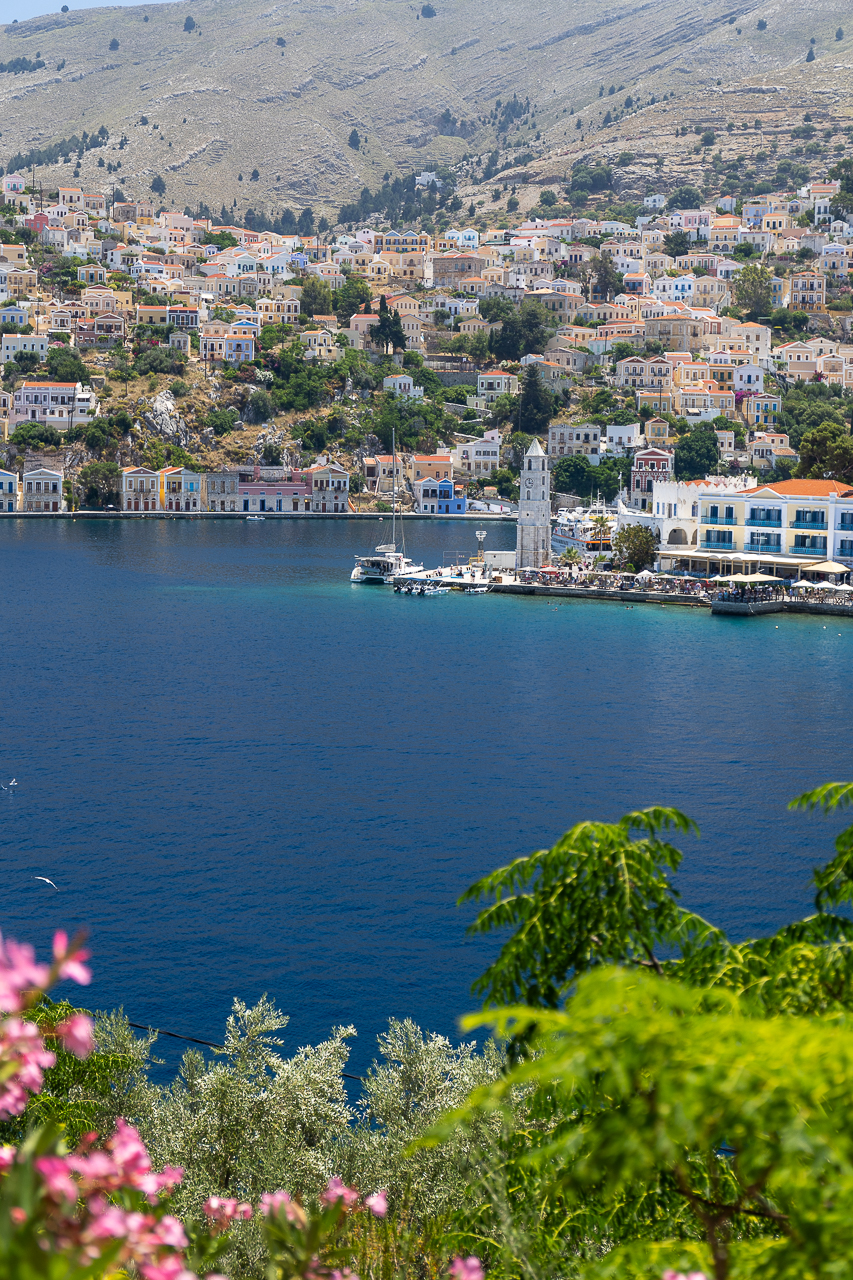
A bird’s-eye view of Gialos from Evangelistria Church
Nos Beach – A Refreshing Escape
As you continue your walk along the waterfront, you may notice a simple word painted on a wall: “Beach.” It’s hard to resist the invitation. Just a few minutes beyond the harbor, past the waterfront tavernas and around the corner near Tholos, you’ll discover Nos Beach—the closest beach to Symi Town.
This small pebble beach is a favorite spot for both visitors and locals looking for a quick swim without venturing far from Gialos. The crystal-clear turquoise waters are incredibly inviting, especially on a hot summer day. Simply find a spot on the shore, leave your belongings, and dive into the refreshing Aegean Sea. Sometimes, the simplest pleasures create the most memorable holiday moments—and at Nos Beach, no further explanation is needed.
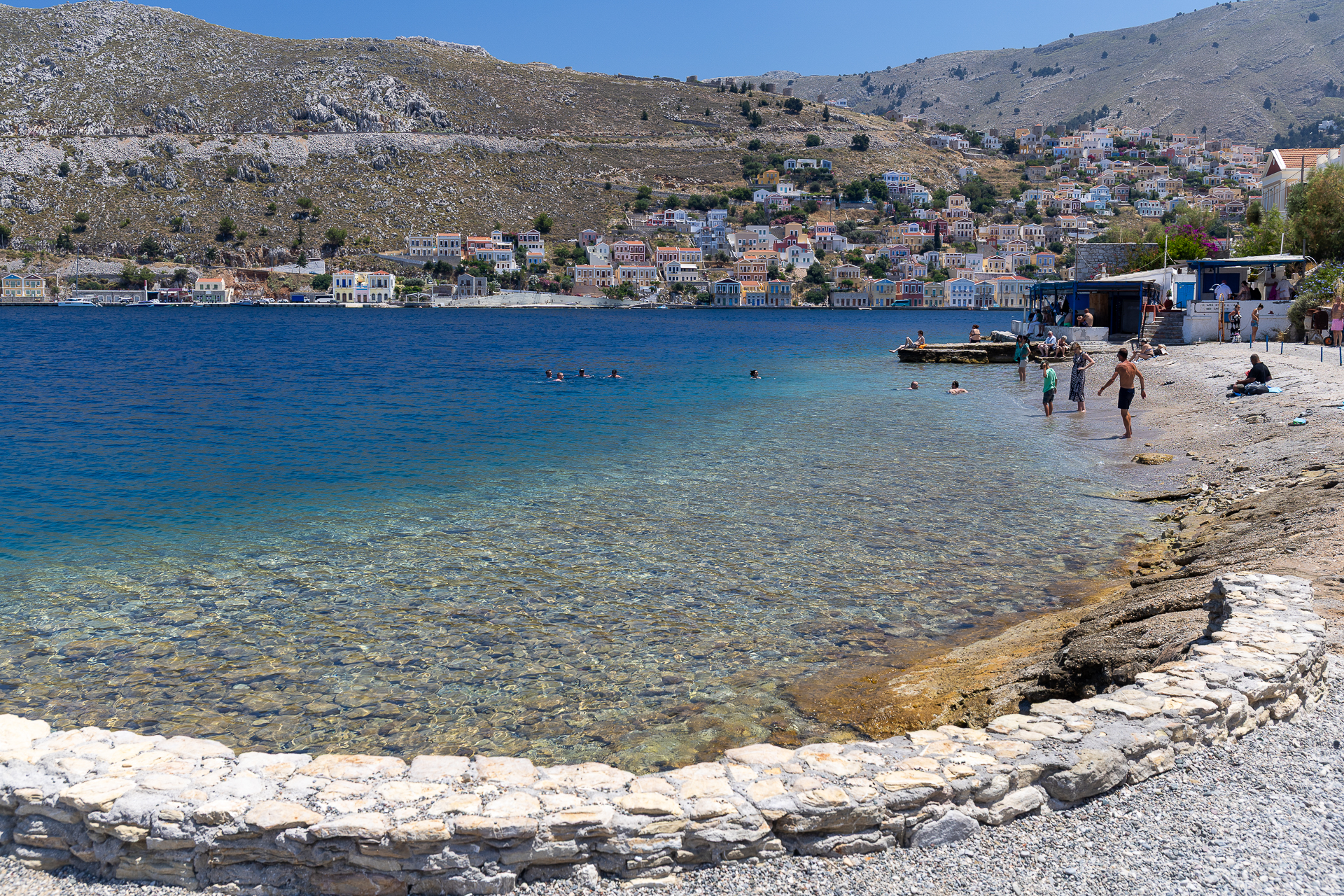
Nos Beach – just a short stroll from the harbor
Travelers who prefer to avoid long walks can hop aboard the charming Noddy Train for a fun 45-minute panoramic ride through Gialos and along the coast to Nimborio. It’s an easy and relaxing way to discover more of Symi while enjoying beautiful coastal views.
Chora – the Upper Village
Above the colorful harbor of Gialos, the hillside village of Chora, also known as Ano Symi, reveals a completely different side of the island. Originally built around the castle for protection, it is the oldest residential area of Symi and a wonderful place to experience the island’s authentic character.
Take a walk through its charming cobblestone alleys and discover traditional houses, elegant old mansions, small chapels, and beautiful churches hidden around every corner. The narrow streets climb up the hillside like a little maze—perfect for those who enjoy wandering and discovering places at their own pace.
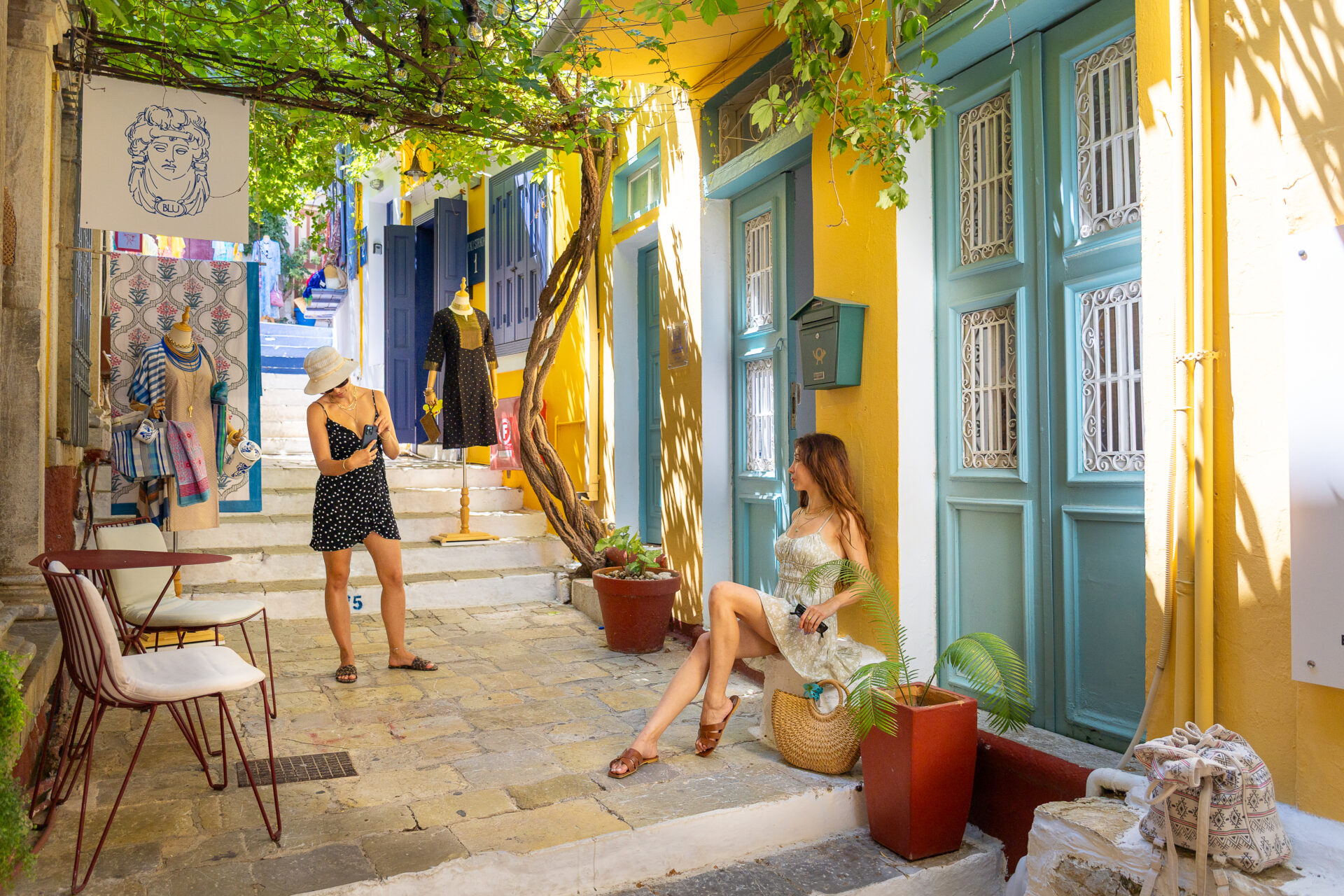
Step away from the harbor and discover the quieter side of Symi — a world of stone pathways, colorful doors, and timeless island charm
While Gialos welcomes visitors arriving by sea, Chora is where the everyday life of the Symiots continues. The village square is still a favorite meeting place for locals, offering a glimpse of the island’s relaxed lifestyle.
If you have enough time, continue your walk to the Knights’ Castle for beautiful views, visit the small Archaeological Museum inside the historic Farmaki Mansion, or simply enjoy the peaceful atmosphere of this traditional village.
For hiking lovers, the area around Lofos of Noulias offers a scenic route with views over Symi, leading to the archaeological site of Pontikokastro and the island’s old windmills. It is a beautiful way to discover the quieter and more authentic side of Symi.
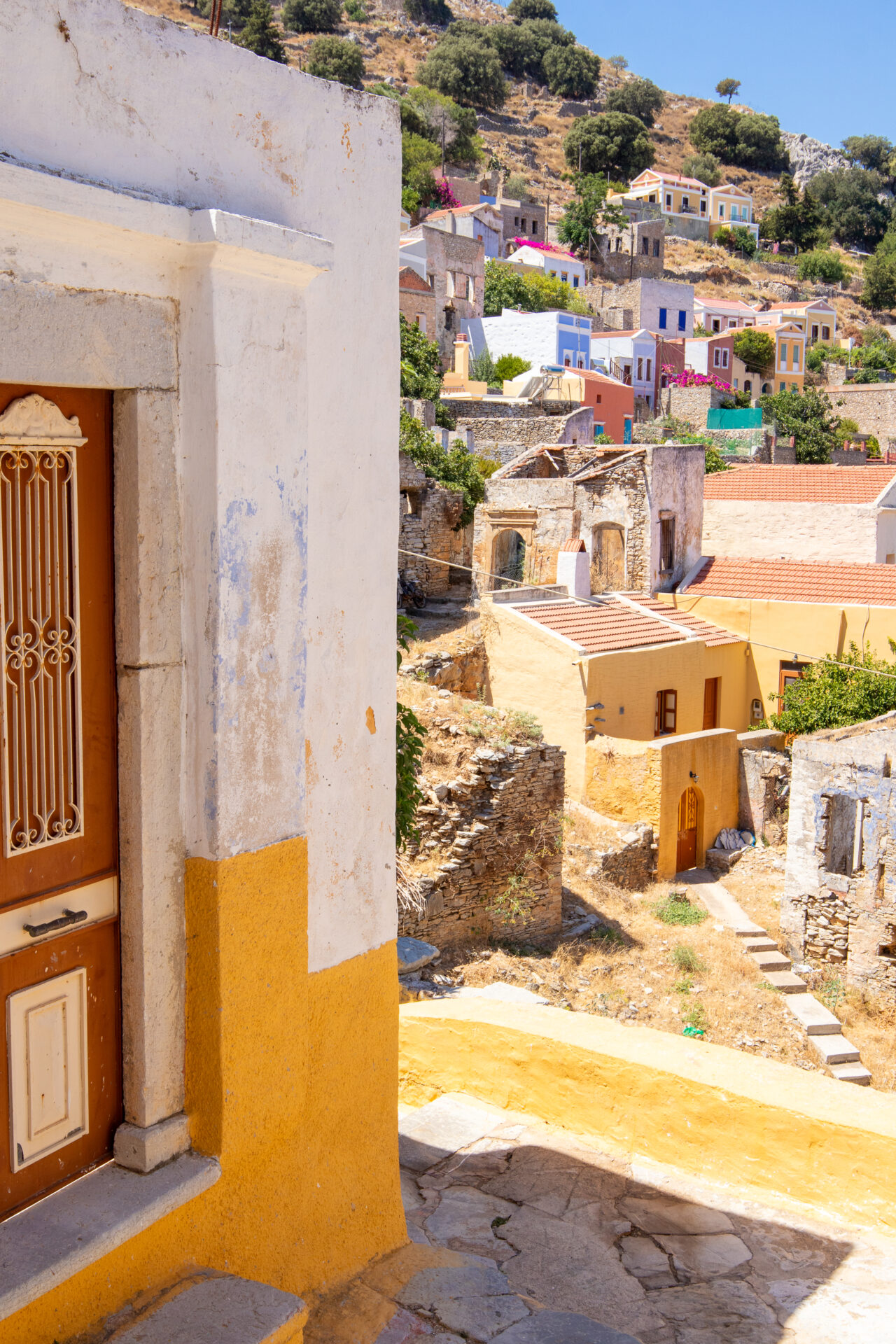
The backstreets of Chora
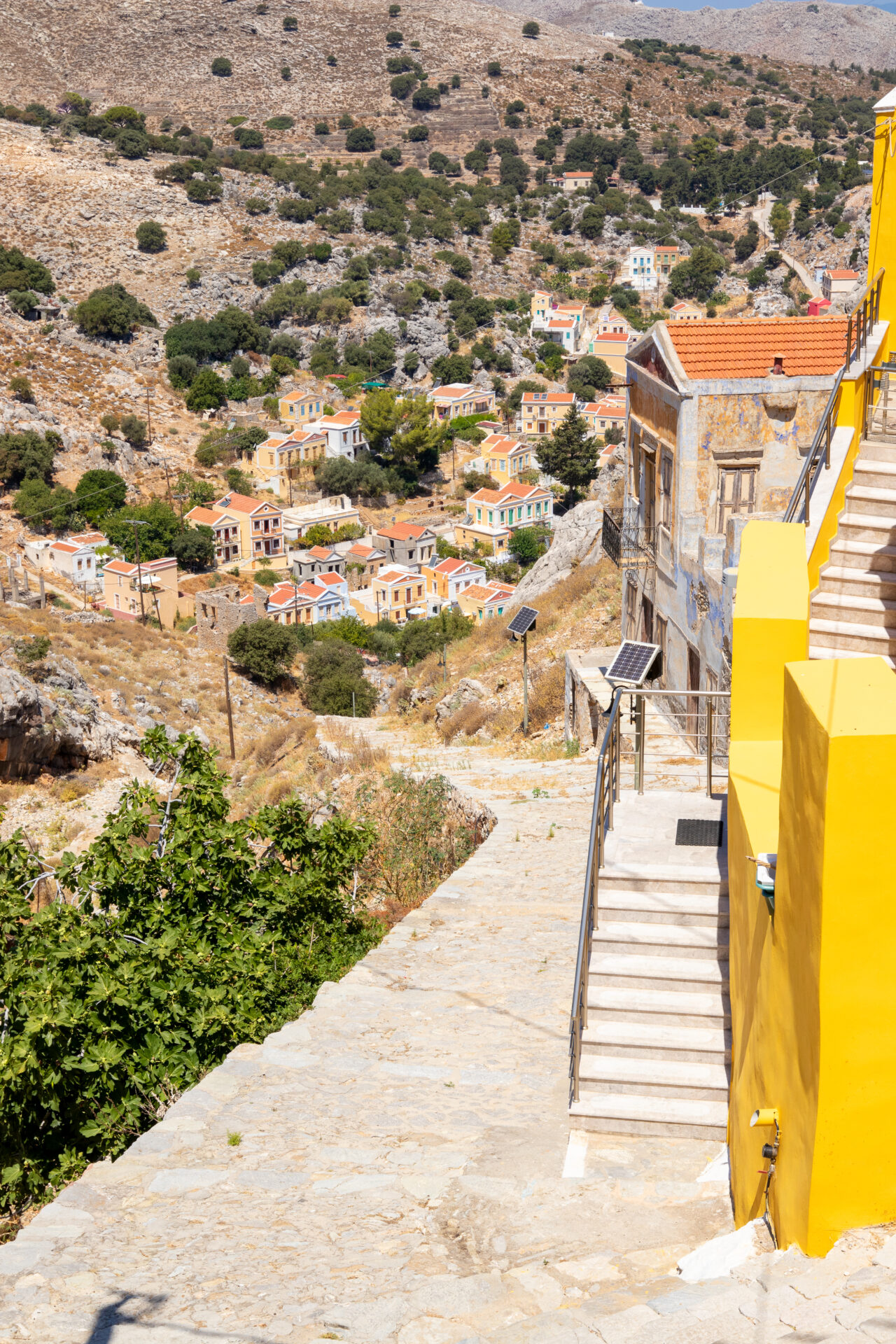
The quieter side of Symi
“Kali Strata”
If you are up for a walk to Chora, don’t miss the historic Kali Strata — one of Symi’s most famous landmarks. This beautiful stone pathway, with its approximately 500 steps, was once the main connection between the harbor of Gialos and Ano Symi.
Originally built as a comfortable route for the island’s wealthy residents, who lived in the elegant mansions of Chora, Kali Strata was more than just a road — it was part of daily life on the island. Today, walking along this historic path offers a peaceful journey through Symi’s past, with traditional houses, old stone details, and beautiful views along the way.
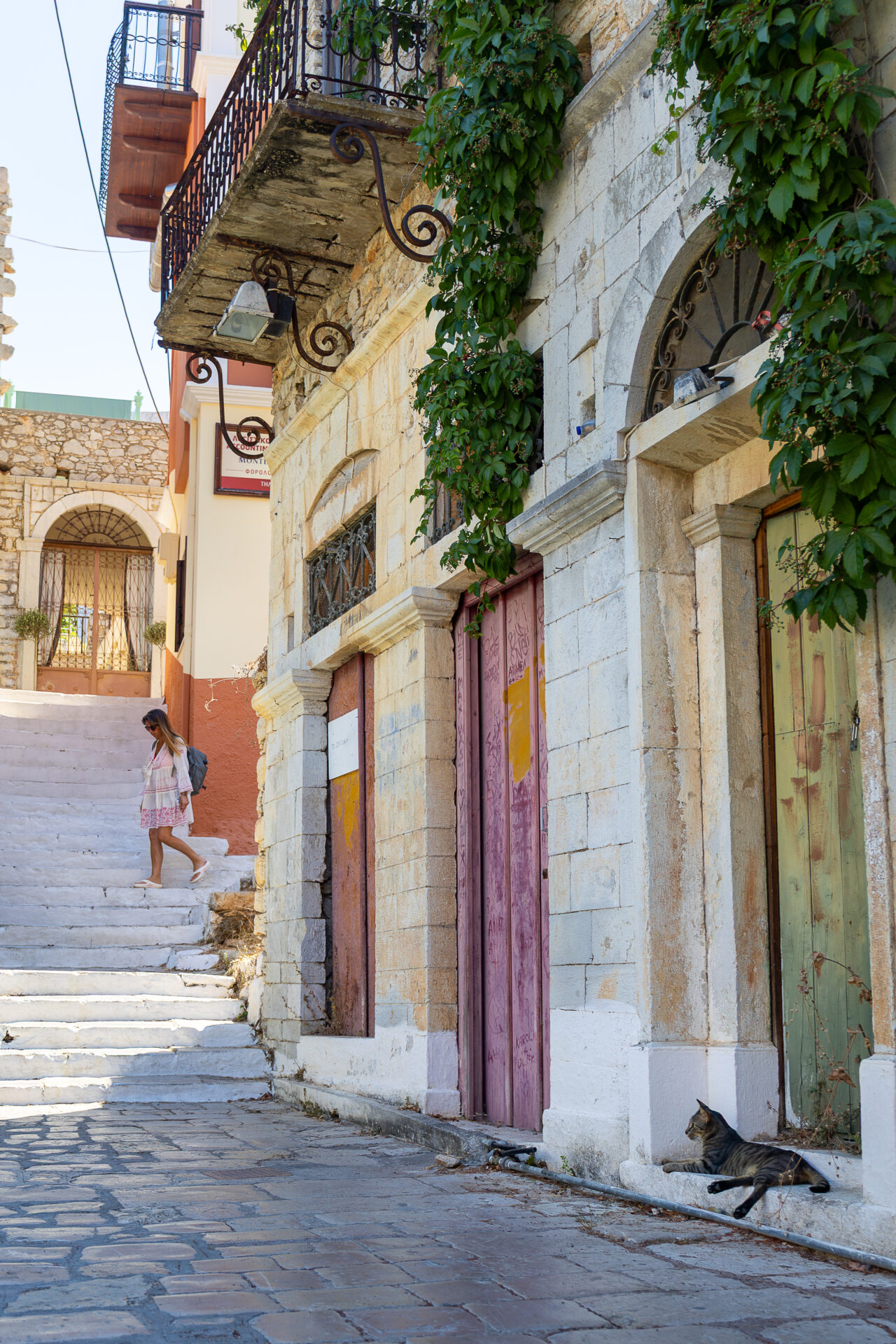
Kali Strata was once the heart of daily life on the island
As you climb higher, you will also notice abandoned and ruined buildings known as “Halata” — silent reminders of the difficult years and the devastating impact of World War II on the island.
To find Kali Strata, start from Skala Square in Gialos and look for familiar landmarks such as Yacht Cafe and Trata Tavern. From there, just follow the steps upwards. Yes, there are 500 steps!
Kali Strata translates to “Good Path” in Greek
Knights’ Castle
At the highest point of Chora stands the Castle of the Knights of St. John, overlooking the island and the endless blue of the Aegean Sea. Built as a stronghold and a place of refuge, the castle played an important role in protecting the people of Symi during times of conflict and invasions.
The fortress was decorated with the coat of arms of the Grand Master D’Amboise, a reminder of the period when the Knights of St. John ruled the Dodecanese. Within the castle walls, you can also find the church of Megali Panagia, which once served not only as a place of worship but also as a school for the local community.
The site suffered major damage on September 24, 1944, during the final years of World War II. Today, the castle is mostly closed to visitors, but even from the outside, the walk up is worth it for the impressive views over Chora and the surrounding sea. It is a peaceful place to pause and imagine the centuries of history that shaped Symi.
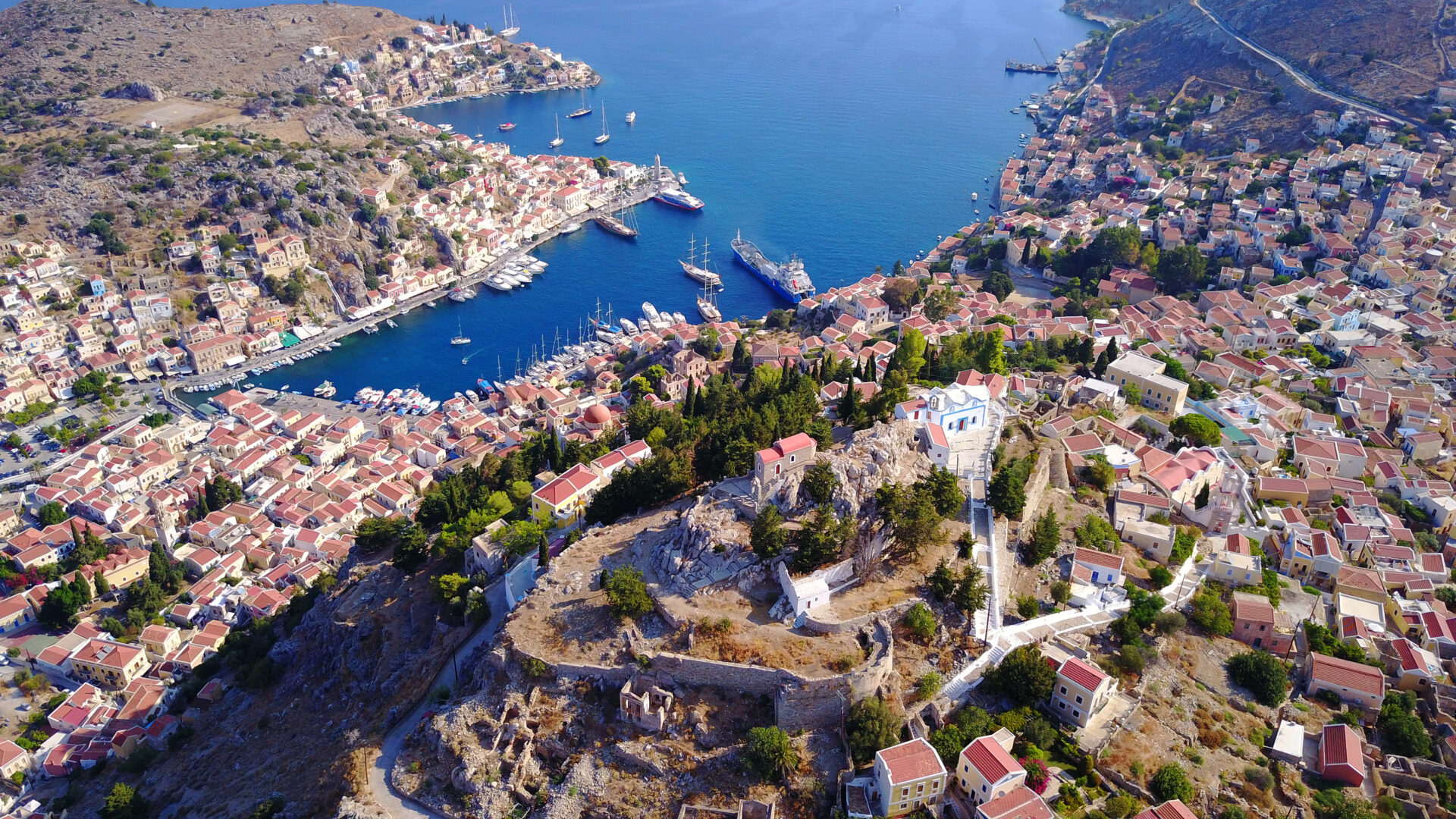
From above, the Castle of the Knights reveals its perfect position at the highest point of Chora, surrounded by the beauty of Symi
A visit to Symi is a journey through colors, history, and authentic island life. From the moment you arrive at the breathtaking harbor of Gialos to the peaceful streets of Chora above, you discover an island that feels timeless. If you are visiting Rhodes, a day trip to Symi is more than just an excursion — it is a beautiful memory filled with the charm, beauty, and magic of Greece!


