

ANCIENT

ARCHAEOLOGICAL SITE

MEDIEVAL
A picturesque & colorful welcome
Driving up the wide, winding road through the fragrant pine forests of Filerimos is already part of the experience. And once you reach the top of the hill, you are welcomed by one of the site’s most famous residents — hundreds of colorful peacocks freely wandering around the grounds. Quite an unforgettable welcome!
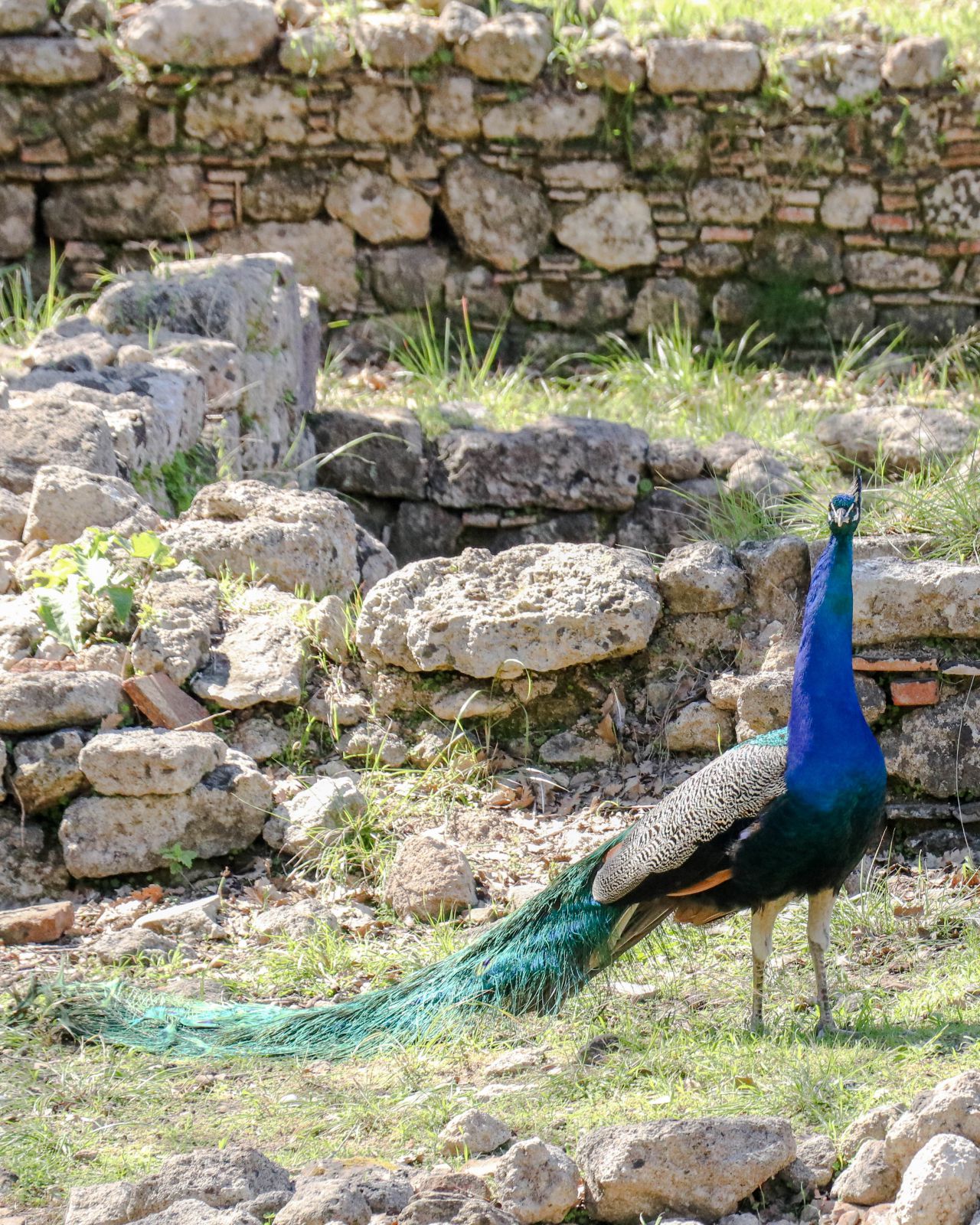
Colorful Peacocks freely wander through the site
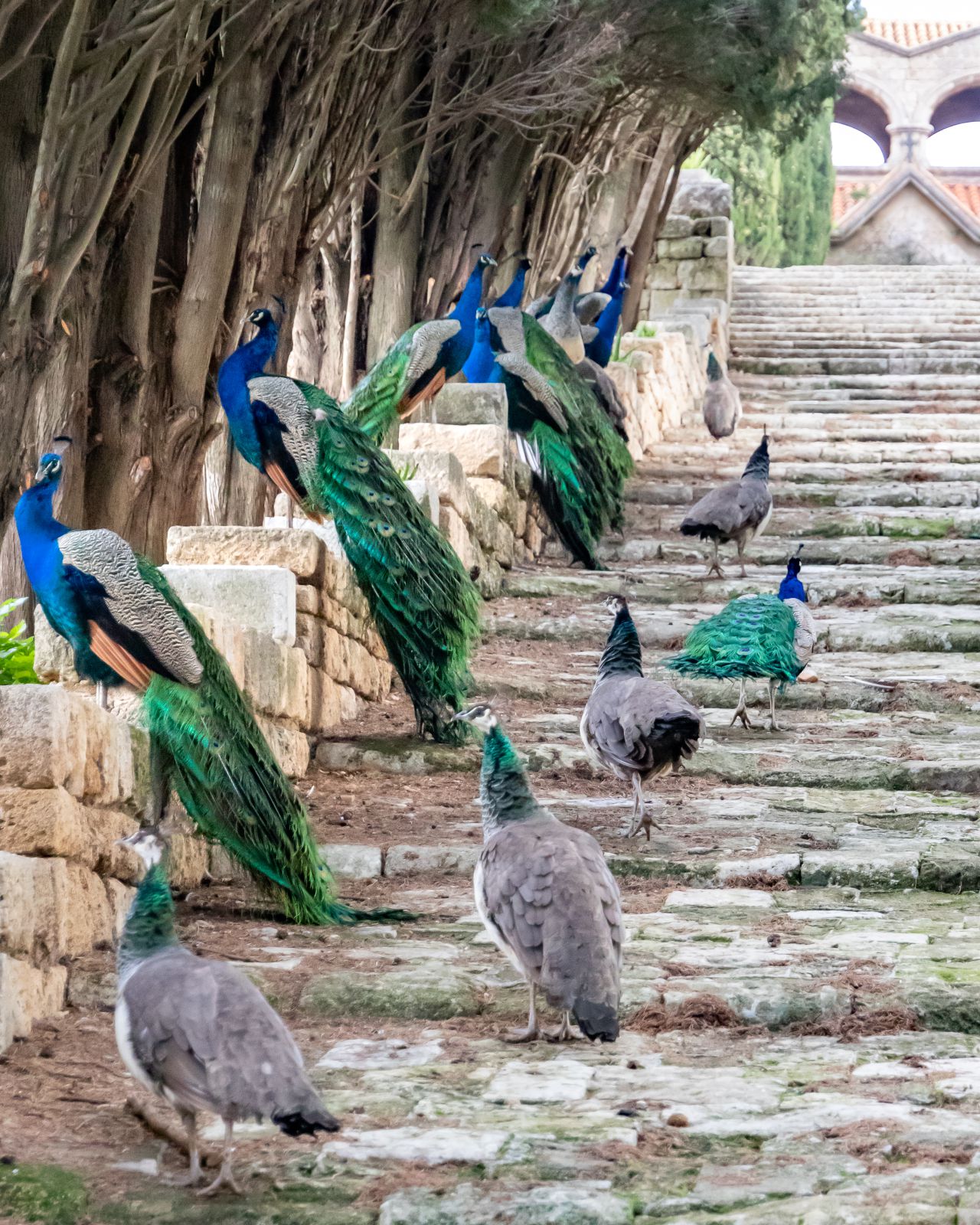
What an impressive welcome!
Filerimos has always been one of the favorite places for locals on Rhodes. Families come here for relaxing walks in nature, children happily feed the peacocks, and many visitors stop to buy the famous local “Seven Herbs” liqueur. Others simply come to enjoy the peaceful atmosphere, watch the sunset over the Aegean Sea, or observe airplanes landing and taking off from Rhodes International Airport Diagoras below.
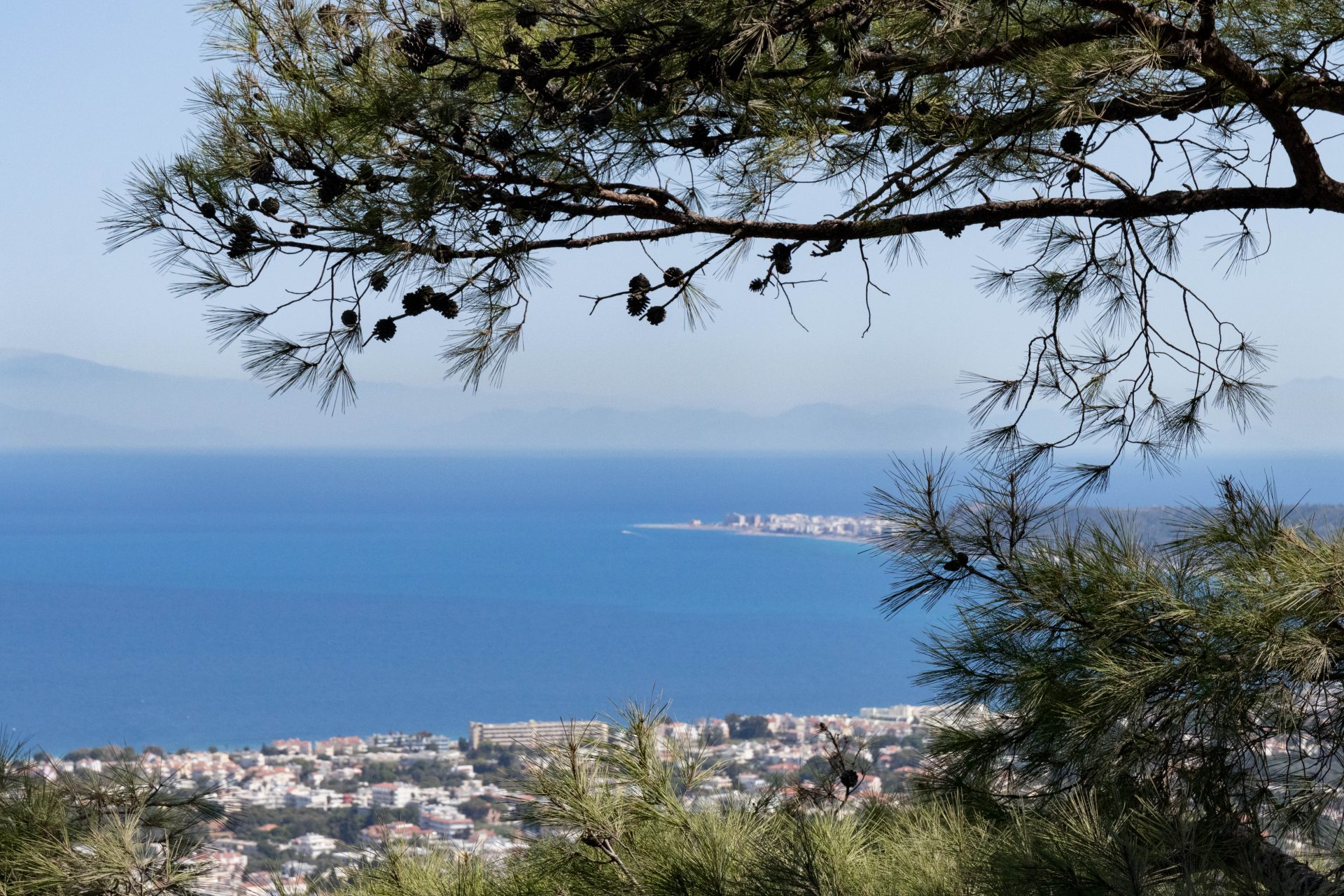
View from Filerimos Mountain overlooking Ixia Bay
During springtime — especially before the busy beach season begins — the hill becomes popular with joggers, hikers, and cyclists enjoying the cooler temperatures and fresh mountain air. Filerimos is also considered one of the most romantic spots on the island and is a popular venue for weddings thanks to its beautiful scenery and panoramic views.
But Filerimos is far more than just a scenic viewpoint. Hidden among the pine trees are the ruins of the ancient acropolis of Ialyssos, together with a remarkably well-preserved medieval monastery. History, nature, and stunning landscapes all come together here — and there is truly a lot to discover.
Ancient Ialyssos
When archaeologists led by Alfred Biliotti discovered the necropolis of Ialyssos in 1876, between today’s Trianda village and Filerimos hill, it became clear that this was one of the oldest well-defined settlements on Rhodes, dating back to around 1550–1400 BC. Archaeological finds, many of which are displayed today at the Archaeological Museum of Rhodes, show that the area had already been inhabited during the 2nd millennium BC.
In ancient times, the city-state of Ialyssos controlled much of the northern part of Rhodes and reached its peak around the 5th century BC. At the top of Filerimos hill stood the Acropolis of Ialyssos, where the main temple was dedicated to the goddess Athena Polias, protector of the city. Ancient inscriptions from the 3rd and 2nd centuries BC also mention the worship of Zeus Polieus at the site.
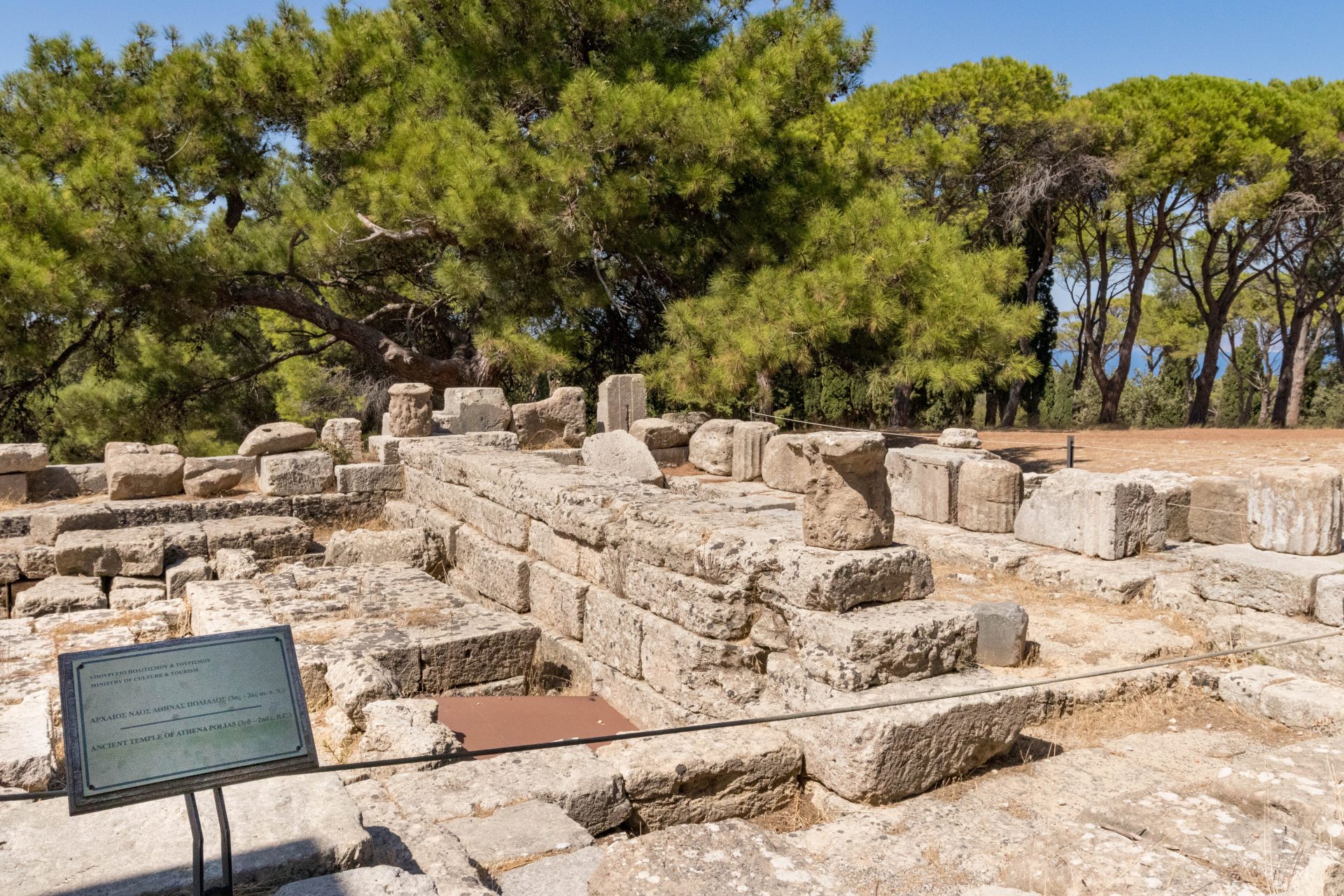
The remains of the Temple of Athena Poleos in the Acropolis of Ancient Ialyssos
Today, visitors to Filerimos can still see the remains of the Hellenistic temple dating from the 3rd or 2nd century BC. The temple survived for many centuries before being destroyed in the 6th century AD, when much of its building material was reused for the construction of the large three-aisled basilica that once stood on the hill.
Archaeological discoveries around the temple reveal the long religious importance of the site. Among the findings were pottery from the 5th century BC, votive offerings dating from the 9th to the 5th century BC, and beautiful jewelry pieces from the 5th century BC — many of which are now displayed at the Archaeological Museum of Rhodes.
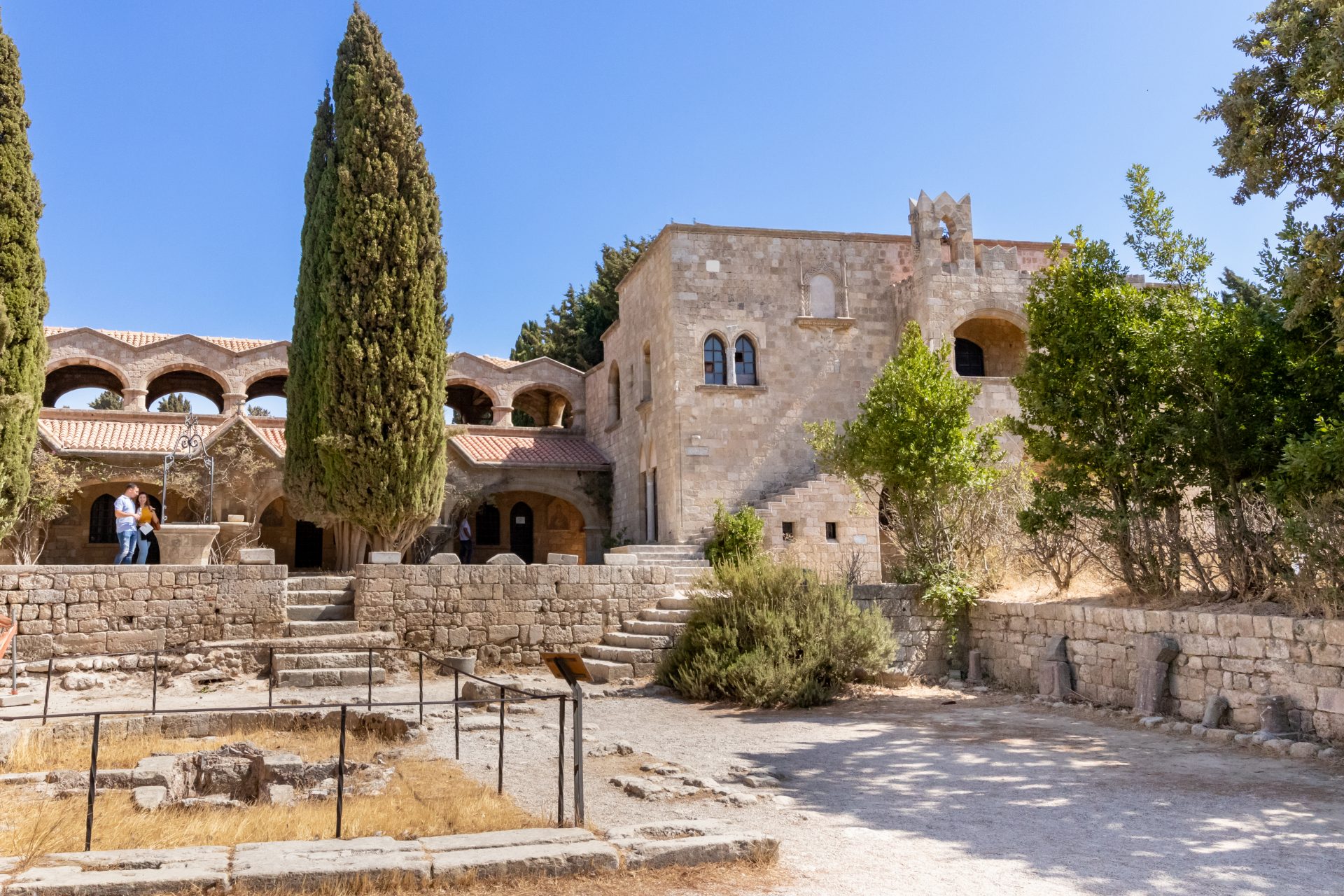
Filerimos Monastery above the ruins of the Ancient Ialyssos
Another remarkable monument on the hill is the Doric Fountain House, built in the 4th century BC. This ancient water supply system was constructed from porous stone and engineered with impressive skill. Two underground tunnels carried water from a natural spring into a rock-cut reservoir. The façade of the fountain house was decorated with six Doric columns, while the water once flowed out through marble spouts shaped like lion heads.
Unfortunately, only a small part of the archaeological discoveries from Ialyssos can be seen today at the Archaeological Museum of Rhodes. Many important findings were taken abroad and are now displayed in institutions such as the British Museum and the Louvre Museum.
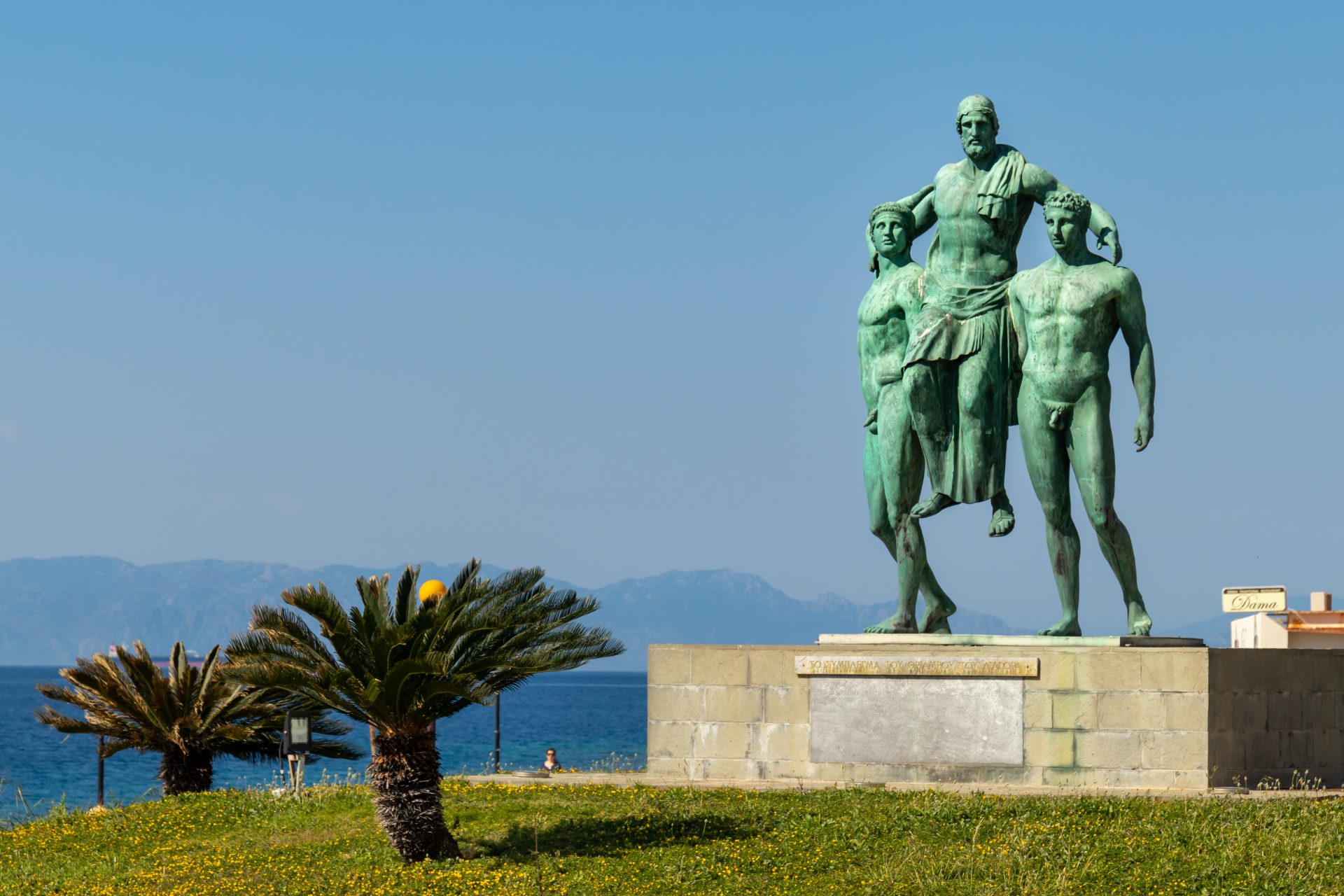
The statue of Diagoras of Rhodes — legendary athlete from Ialyssos and one of the symbolic founders of Rhodes Town
After the foundation of the city of Rhodes Town in 408 BC, ancient Ialyssos gradually declined as many of its inhabitants moved to the new capital. Still, the city remained famous throughout the ancient Greek world for its celebrated athletes from the Eratides family — especially Diagoras of Rhodes, one of the greatest boxers of antiquity, who won the Olympic boxing competition three times. Diagoras became a true national hero of Rhodes. Today, visitors can see his statue near the entrance of Rhodes Town, and even the island’s airport, Rhodes International Airport Diagoras, proudly carries his name.
Filerimos Monastery
During early Christian times, ancient cult sanctuaries were transformed into churches. On top of the ruins of the ancient temple, a new three-aisled basilica was built dedicated to the Virgin Mary and a Byzantine monastic complex from the 10th c. During the Byzantine period and under the Knights of St. John, a new church with a vaulted roof and two hexagonal chapels were built. Also, a two-story Monastery building with an interior courtyard (atrium) with arched arcades around it, leading to the monks’ cells on the ground floor and Abbot’s quarters on the first floor. During the Ottoman invasion, the Monastery was destroyed and used for military purposes.
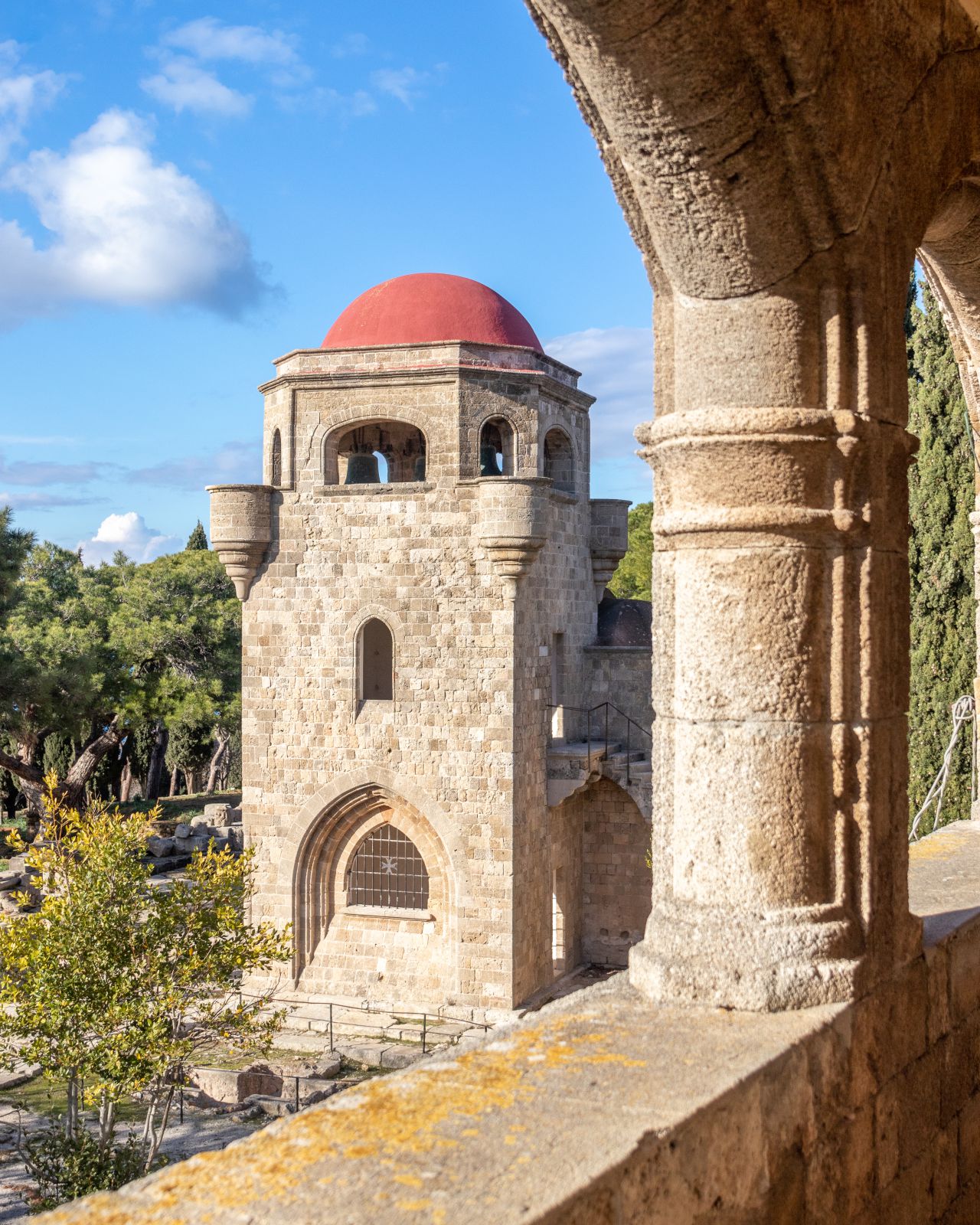
Church built by the Knights of St. John
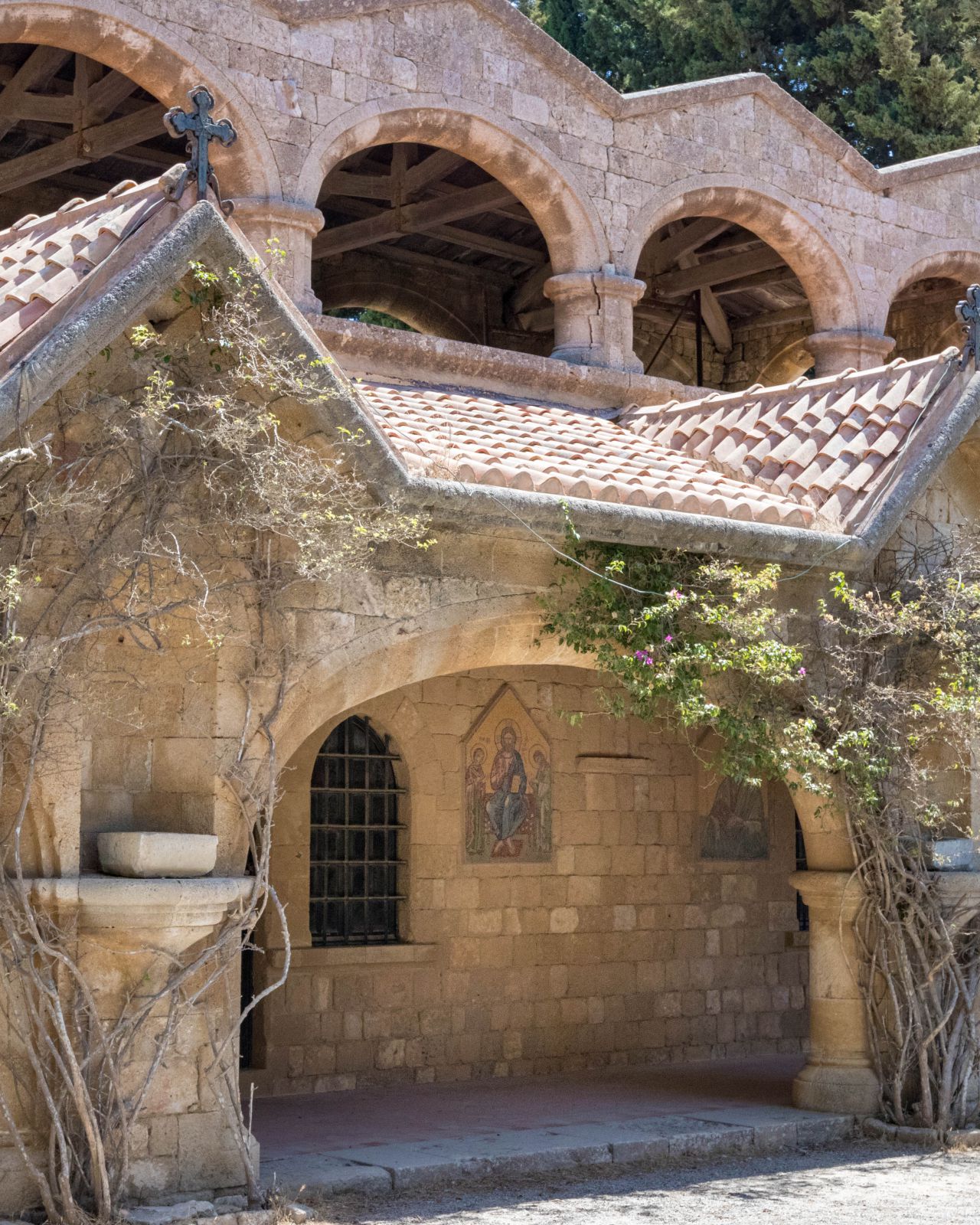
A two-story Monastery building with arched arcades
The Monastery as we see it today was restored during the Italian domination. Extensive excavations were carried out bringing to light the Doric Fountain-house and the earlier phases of the temple of Athena. The reconstructed monastery was inaugurated in 1931 by the 77th Grand Master of the Order of Malta Ludovico Chigi Albani Della Rovere. It was inhabited by Italian Catholic monks (Capuchins) 1912-1943.
Capuchin monks left their secret recipe of the Seven Herbs liqueur (Sette Erbe) to a local greek family. It is a mixture of seven locally-found herbs. Sweet and digestive!
Unfortunately, monks left the monastery after the Nazi occupation. Today, a local family still takes care of the Monastery area, feeds the peacocks, and runs a little canteen where one can taste and purchase the famed liqueur.

The Seven Herbs Liqueur Sette Erbe can be found only in Filerimos
Also, worth mentioning is the 15th c. single-cell chapel of Ayios Georgios Chostos situated to the left of the main entrance. It’s interior is fully covered by with superb wall-paintings using a technique developed by the Knights.
The Icon of the Virgin of Filerimos
The church is well known for housing a copy of the original icon of the Virgin of Filerimos. The icon is attributed to St. Luke the Evangelist and was brought most likely from Jerusalem into Rhodes during the 13th c. where it remained until 1523. When the Ottoman Turks invaded the island, the Knights took the icon with them to France, then Italy, Malta, and Russia, where it stayed until the 1917 revolution. Nowadays, the icon is being kept in the National Museum of Montenegro in the “Blue Chapel”.

The Icon of the Virgin Mary at Filerimos Monastery
The Calvary Route
In the ’20s, during the reconstruction of the Monastery, a very important part was added to the Mt Filerimos – the Calvary route (via Crucis or the road to Golgotha). It sets off from the square that leads to the westernmost point of the hill. The 400 m (0.248 mi) stone-paved path is dotted with 14 Holy Shrines, works of Italian sculptor Antonio Maraini, presenting Jesus Christ’s Passions and his way to Calvary. At the end of the path is a small square with an imposing cross 17.8 m (58.4 ft) overlooking the Northeast part of the island.

The Calvary route (via Crucis or the road to Golgotha)
If you happen to visit Filerimos Hill in the evening, it might be one of your best sunset experiences on the island!

Sunset view from Filerimos Viewpoint
There are many more stories and mysterious legends to tell about Filerimos, but it is best to listen to them from locals!!!
If you have been to Filerimos, let us know through social media, how you liked it! If you find this information useful and interesting, make sure to share it! We will be very happy and appreciate it!


